
BERTHA Project Makes a Strong Impact at EUCAD 2025 with Human-Centric Driving Tech
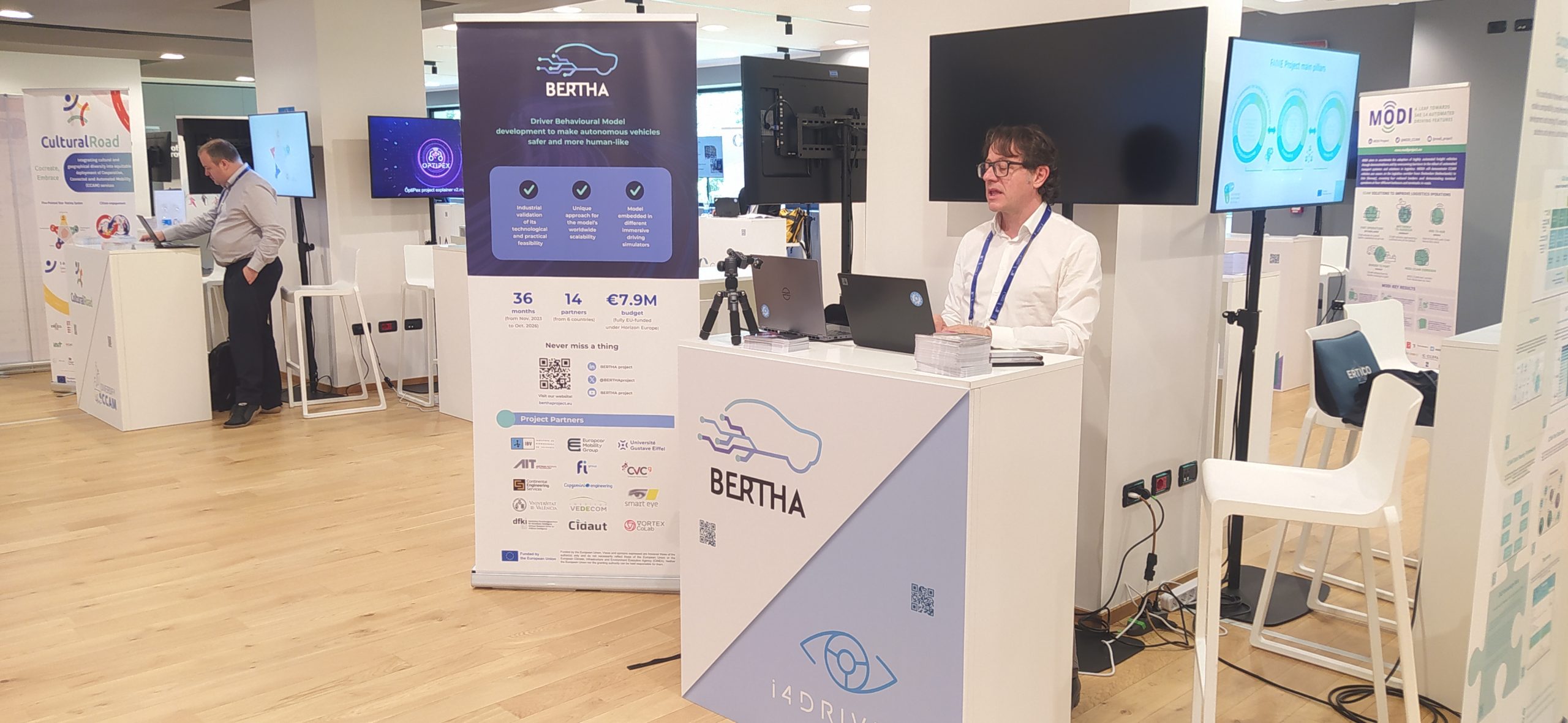
BERTHA at EUCAD 2025: Advancing Human-Centric Automated Driving
The BERTHA project proudly participated in EUCAD 2025, Europe’s premier conference on Connected and Automated Driving (CAD). Organized by the European Commission, in collaboration with the European Partnership on Connected, Cooperative and Automated Mobility (CCAM) and FAME, the event brought together key stakeholders to shape the future of mobility and BERTHA was at the forefront of the conversation.
Showcasing Innovation: What Visitors Experienced at the BERTHA Stand
At the BERTHA booth, attendees explored our latest innovations in driver behavior analysis and emotional response monitoring:
- Project Roll-Up and Info Cards
A quick and engaging introduction to BERTHA’s mission, goals, and research focus. - Project Overview Video
A visual journey through our objectives, methodology, and early results in human-centered CAD. - Live Demonstration of Driver Monitoring Equipment
Visitors experienced our real-time physiological signal recording tools, designed to capture emotional and cognitive responses — a key step toward safer, more adaptive automated driving systems.
Powered by IBV: Leadership in Action
A special thanks to Instituto de Biomecánica (IBV), BERTHA’s coordinating partner, for leading the stand and engaging with the CAD community. Their presence helped amplify the project’s visibility and impact at this high-profile event.
Why BERTHA Matters: Putting Humans at the Center of Automation
As automated mobility evolves, understanding human behavior, stress, and emotional states is essential. BERTHA is developing tools that ensure future driving systems are not only intelligent but also empathetic, inclusive, and responsive to real human needs.
What’s Next for BERTHA?
While EUCAD 2025 has concluded, the BERTHA project continues to push boundaries in human-centric mobility research. Stay tuned for more updates as we refine our technologies and share new results with the CAD community.